I'm writing this in early August . . . yes, over a month behind on the blogs. How do the "Big Year" birders keep up???
 |
| The yard turkeys came over to bid me adieu |
Thursday the 27th dawned clear and calm again at 67º when
I woke at 6 a.m. I had breakfast with Cousin
Blythe and Bob, and headed on out, across the Tappan Zee Bridge into
Connecticut. I pulled off Highway 15 to
stop at Stamford for gas, and birded a bit at the Hoyt-Barnum House museum
grounds, then got back on the highway, making it as far as the town of Old
Saybrook, where I checked into the Super 8.
I made a late afternoon run out to a boat launch at the Great Island
Wildlife Area/Roger Tory Peterson Natural Area Preserve in Old Lyme. The preserve is owned and operated by the
Connecticut Audubon Society. I was
looking for a Saltmarsh Sparrow, which would be a “Life Bird”, but not much was
moving this late in the day. I thought
I’d kept an eBird list for my stop here, but apparently it didn’t load.
 |
| There was an Osprey chick in the nest near the boat launch |
Old Lyme is the namesake for Lyme Disease, which Dr. Willy Burgdorfer identified as being carried by ticks, first from this location. Indeed, there are lots of ticks in the area.
 |
| Photo from the Bay Area Lyme Foundatio |
Waking on Friday the 28th, I ate a bowl of
cereal at the motel; they have microwave waffles and cold cereal for breakfast
at this place. At least they had coffee
& milk . . . I drove the 10 miles
back to Hammonasset Beach State Park, and paid the $15 entrance fee.
 |
| The Hammonassett people are no more . . . |
The Meig's Point Nature Center and marsh are
at the south end of the park, and my goal today is to see a Saltmarsh Sparrow. As soon as
I got out of the car, I saw a sparrow teed-up out in the marsh, and thought
that “it can’t be that easy . . .” I was
right. It was a Seaside Sparrow. Turning back around, I saw that the local Fish Crows had taken quite an interest in my car.
There were other birds in the marsh, mostly
blackbirds and starlings, but a dozen or so Glossy Ibis and a few egrets.
 |
| Snowy Egret stalking through the marsh |
I walked on out to the Point and out to view the
cormorants on West Rock, then came back around and walked to the observation
deck east of the Center. Along the outer
cobble beach strand, what I had thought were pebbles were instead Slipper Shells.
 |
| I love the Latin name: Crepidula fornicata |
Nearby, an adult Killdeer gave her ‘distraction
display’, feigning a broken wing and attempting to induce me to follow her away
from the nest.
 |
| She's telling me she has a broken wing . . . |
 |
| . . . to draw me away from her precious eggs |
There were the usual ‘brush birds’ along the ‘trail’, as
well as some gulls and terns.
 |
| Common Yellowthroats were very vocal here |
 |
| Song Sparrows were carrying food back to their clutch of young |
 |
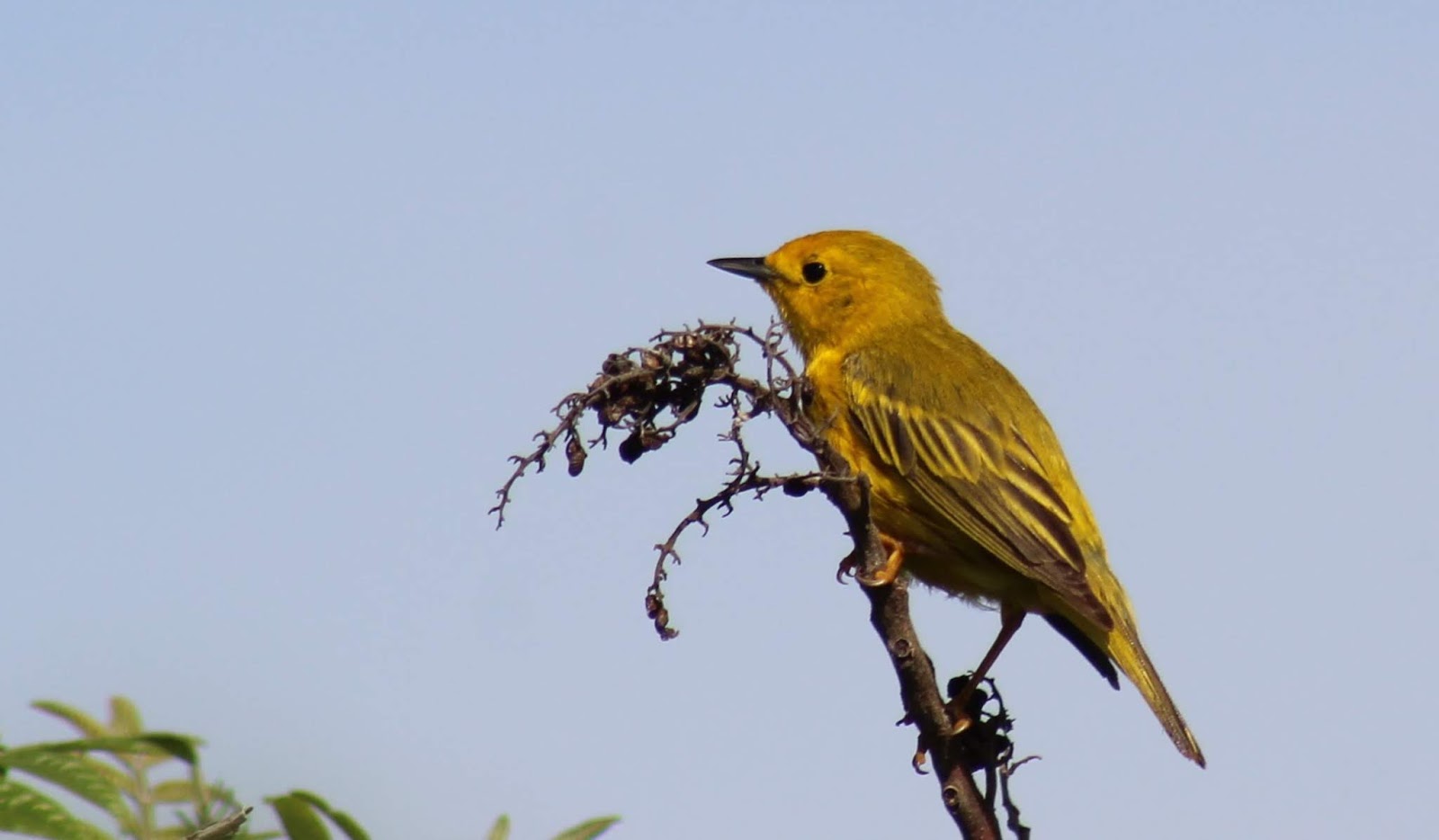
| Yellow Warbler |
 |
| Herring Gull |
 |
| Great Black-backed Gull |
 |
| Common Tern |
Finally, I got the scope on a sparrow with the buffy
orange ‘mustache’ and stripe above the eye, as it jumped up on some marsh
grass, then dropped before I could get the cell phone camera focused for a
digiscope shot. But - Yes! This was ABA Life Bird No. 617 for me. I heard the call of another Saltmarsh Sparrow
further along but still couldn’t get a photo. I could get shots of the numerous Willets.
 |
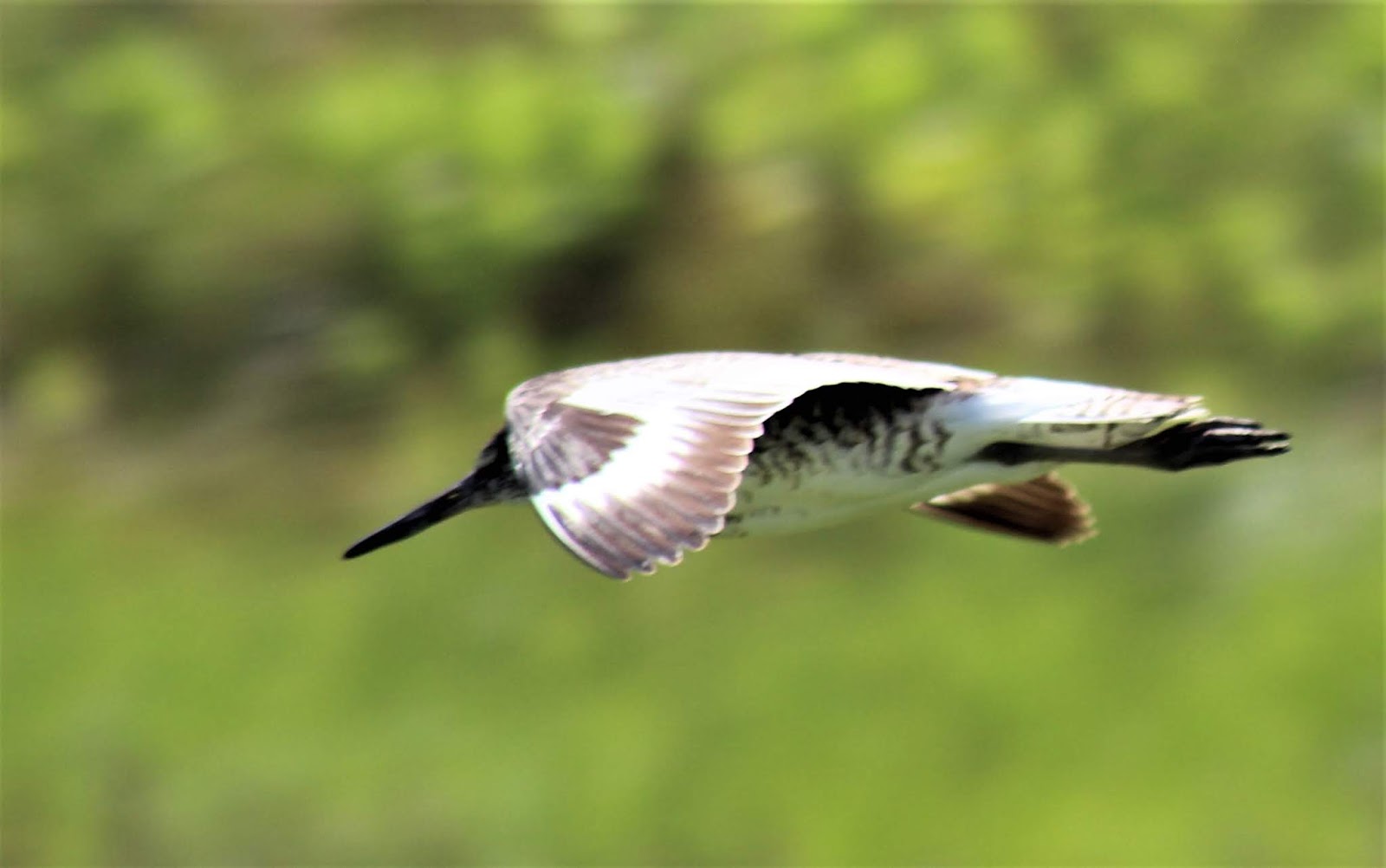
| Willet - Or, won't it? |
 |
| Willets show a distinct black-and-white pattern on their wings |
Another 'bird-watcher' tried to convince me that she was seeing Bank Swallows, but all I saw were the abundant recently-fledged Tree Swallows, which also have a dark 'breast band', reminiscent of that on the Bank Swallow.
 |
| Juvenile Tree Swallows |
I spent about 2 ½ hours birding along the marsh, then
stopped at the Meigs Point Nature Center, which is really well done, having
exhibits for the marsh, the woods, and the air.
They also had a pair of Monk Parakeets and a Blue Jay, who were keeping
the volume elevated in the building. In the
marsh back of the Center was a foraging raccoon, bidding me so long.
I headed east into Rhode Island, and stopped to walk the
Foster Cove Loop trail at Ninigret NWR, before heading toward New
Hampshire.
 q q |
| They have quite an extensive trail system here |
It was a pretty warm afternoon,
so bird activity was a bit muted, but I walked the Foster Cove trail loop to
see what birds and wildlife I might find.
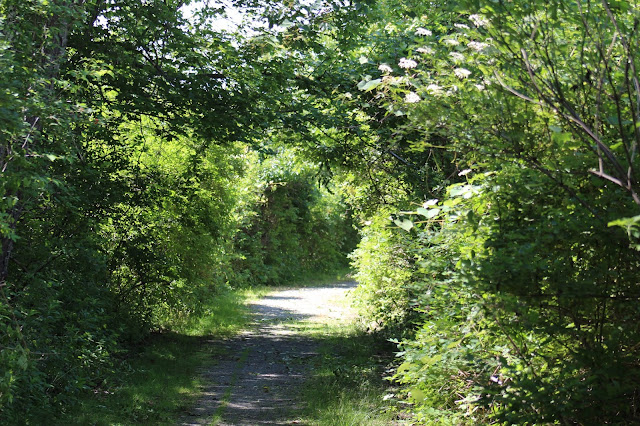 |
| Habitat shot |
Leaving the Refuge and driving north until I tired out, I
checked into the Best Western in Concord.
Hoyt-Barnum House eBird
Checklist is Here
Hammonasset Beach State Park eBird Checklist is Here
Ninigret NWR eBird
Checklist is Here
 |
| Hammonasset Osprey |






 q
q