Redneck: (slang, derogatory) A poor, rural, usually
white and male, person from the Southern United States or parts of the Midwest
and northeast, especially one who is unsophisticated and backward; sometimes
with additional connotations of being rude, racist, and/or arrogant.
Well, I’m not
rich; I am a white male; I've worked on a farm or two, although I’m currently a
suburbanite; and I’ve often been identified as unsophisticated and
backward. Mom was an Okie. I can be rude and arrogant, especially after
a few whiskies . . . But, I vehemently
deplore racism.
But, that’s not
what this Redneck is all about . . .

I drove over to
the Coast this morning. I was raised to
not call it “going to the Beach”, because, unlike littoral areas elsewhere in
the country, the Pacific Northwest has beaches, rocky headlands, estuaries, and
tidepools. The “beach” is often pretty
boring; around here, the water’s cold enough and the wind’s usually cool enough
that you may as well just find something more productive to do than just sit on
the sand.

Today, what drew
me to the Coast was a search for the bird reported as a Little Stint last
weekend, then subsequently confirmed as a Red-Necked Stint after reviews of
photos. The bird had been seen as
recently as this Tuesday, so there’s a chance that it still might be hanging
with the flocks of Western Sandpipers and Sanderlings at Copalis.

As I approached
the mouth of Cranberry/Connor creek, I saw people with spotting scopes who
turned out to be Andy and Ellen Stepniewski, Brian Pendleton, Marcus Roening,
and Heather Ballash.
 |
| This is a Least Sandpiper . . . |
We scoped the
shorebird flocks pretty well, but only found the ‘usual’ Western and Least
sandpipers and Sanderlings in the ‘peep’ flocks.
 |
| . . . hunting for prey in the beach wrack. |
A “Stint” is any one of the small shorebirds
in the genus Calidris, and it takes a bit of patience to work through the
flocks to identify the several species - and hopefully find the odd rarity.

The gulls and
shorebirds were scattered a time or two when an immature peregrine Falcon tried
to find a weak, sick, or unaware prey.
The falcon was unsuccessful while we watched several attempts.

Flocks of
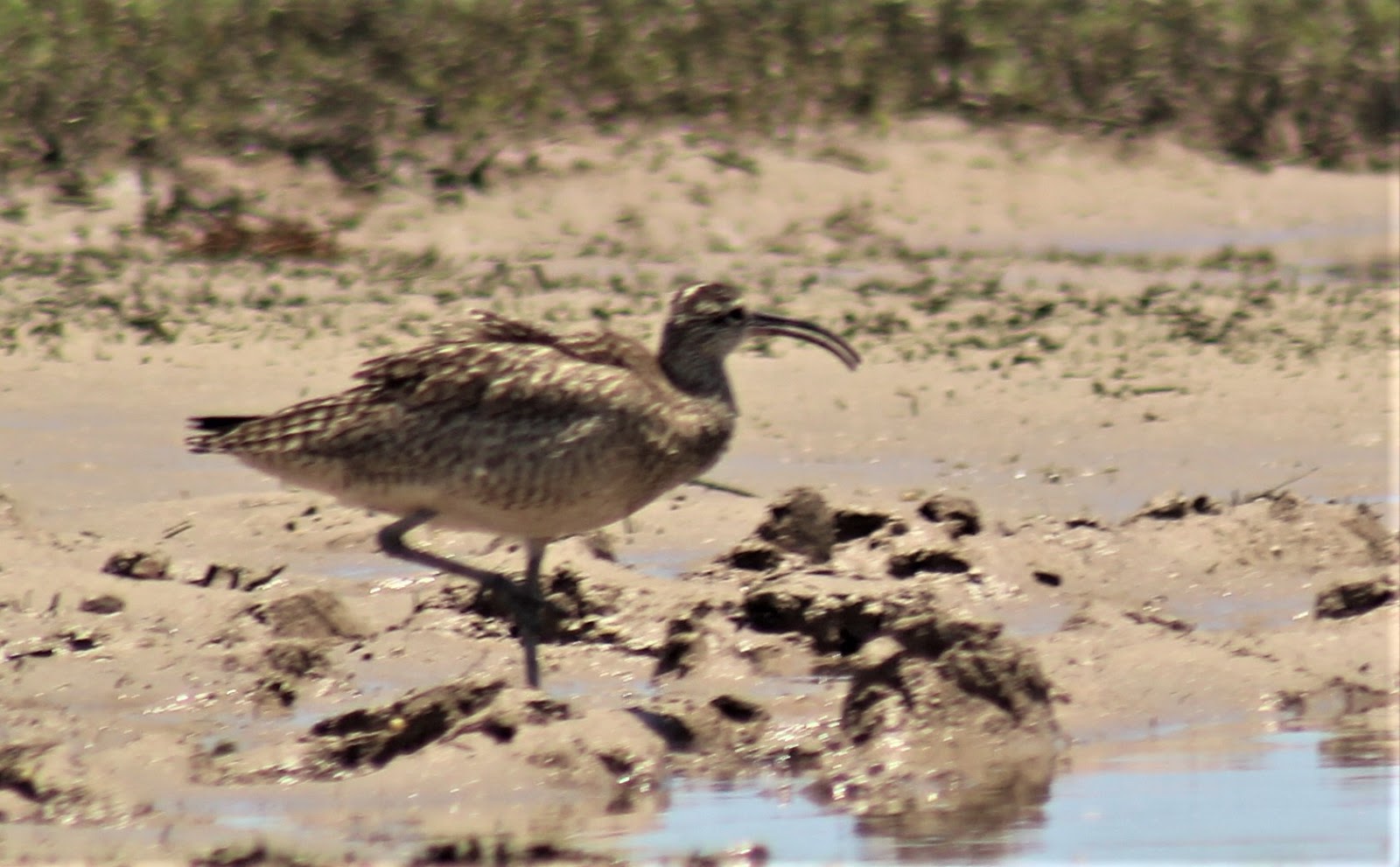
migrating loons offshore, and of Whimbrels along the beach, treated us with
some nice views.

Other than that, it was a pleasant enough day for birding. These gulls enjoyed their Dungeness Crab brunch


We Birders searched for quite a while, but ultimately all “dipped” on the Stint. I
returned to the parking lot at Griffiths-Priday State Park, and enjoyed a lunch
at the Green Lantern before heading back to Olympia.
 |
| Whimbrel |
Griffiths-Priday State Park eBird Checklist is Here
 |
| The Peregrine Falcon |