|
Summary
|
|
Jan
2019
|
Feb
2019
|
Mar
2019
|
Apr
2019
|
May
2019
|
Jun
2019
|
Jul
2019
|
Aug
2019
|
Sep
2019
|
Oct
2019
|
Nov
2019
|
Dec
2019
|
|
Number
of Species
|
233
|
292
|
180
|
228
|
301
|
176
|
235
|
260
|
176
|
170
|
305
|
168
|
|
Number
of Individuals
|
65,155
|
59,123
|
20,734
|
9,776
|
16,059
|
6,317
|
12,559
|
16,555
|
14,195
|
28,808
|
28,286
|
66,166
|
|
Number
of Checklists
|
140
|
87
|
83
|
108
|
91
|
61
|
67
|
92
|
45
|
59
|
121
|
82
|
It’s taken me a while to gather
together all of the ‘statistics’ of my Year of Birding. That’s what happens when one obsesses over
how many miles one has walked, driven, boated or flown to see the birds, how
much one spent on the endeavour, or how many hours one has spent playing this
silly game of “Birding”.
And, when one would rather be birding
than writing a Blog?
I knew that, in taking on a “Big Year”,
I wasn’t about to break any records, as my resources were not sufficient
to chase every rarity across North America.
My goal for the year was rather more personal: I targeted seeing 75 new “Life Birds”, as my
“Life List” stood at only 572 species at the beginning of the year. If I could come in near 650 when I was done,
I’d be one happy camper.
As it was, I ‘birded’ every day
this year; at least I submitted one or more eBird checklists for 365 days in a
row. It’s not that difficult to do, the
nice folks at the Cornell Lab of Ornithology encourage birders to put in an
eBird checklist for even a 5-minute bird watch in your yard or at a feeder or
wherever.
I was away from home 190 of those days,
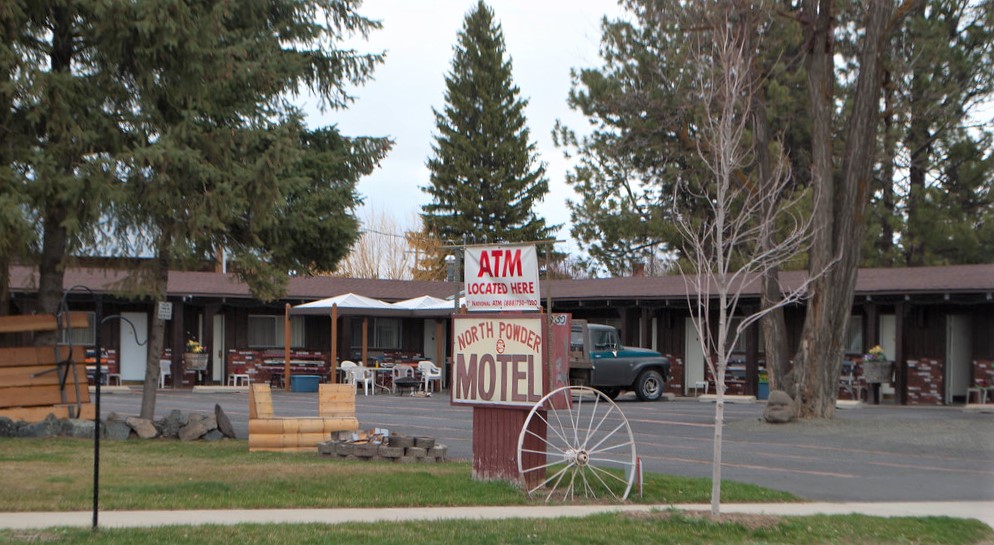
spending ‘way too many nights in motels.
I’d planned on camping out a lot more than I ended up doing, but
inclement weather and BUGS on top of coming in after a full day’s
birding made it easy to default to just crashing at the local Motel 6.
Actually, I prefer to find some little
locally-owned, clean 1940s-era roadside place, rather than end up at an
overpriced chain motel. I usually come
in ‘way too late to want to use the pool or go to the exercise room, and for
the price, I do better finding a little local café or diner for breakfast.
I did end up staying at some
nice places during some of the Birding Festivals. I think the
nicest was the La Posada Hotel in Laredo, Texas for the Birding Festival
in that town.
My “Carbon Footprint” for the year was
considerably higher than optimal. Cris-crossing the continent a few times resulted in putting 46,343
miles on my 2015 CrossTrek. Only 560 of
those miles were actually “road birding”; the other traveling was getting from
one point to another.
I won’t even discuss how much I went
over the Budget that I’d given to Marty before I started this adventure . . .
I used the airline industry four times,
putting 9,977 air miles on the Southwest and Alaska Air ‘rewards’
accounts. Mind you, I hate flying; there
are no more “Friendly Skies”, what with the airlines packing people in like
sardines, reducing in-flight perks, and the nightmarish farce of TSA “keeping
us safe”.
That said, I made round-trip flights to
the Space Coast Birding Festival in Florida and to Saint Paul Island for a
WINGS tour. I also took one-ways to Los
Angeles to board a Princess Lines’ relocation cruise and to Texas to pick up my
daughter’s Subaru & drive it back to the Pacific Northwest - birding en
route, of course.
The Princess Lines Cruise from Los Angeles to
Vancouver, B.C. was the craziest “pelagic” trip I took. This year I was joined by Anders Price, a
birding friend from Olympia. No “Lifers”
for me on this voyage, but we picked up several Murphy’s Petrels, which is a
difficult species to find unless you’re far out to sea.
The repositioning cruises are offered
by several Pacific Coast cruise lines when they are moving their operations
from winter trips into Mexico to or from their Alaska “Inside Passage”
cruises. For Birders, these trips
provide a way to spend a few days further offshore than can be reached by the
“traditional” pelagic birding trips.
The ships don’t stop along the way -
staying over or beyond the Continental Shelf, and spotting scopes work well on
the decks. Dorian Anderson put together
a great “Primer” for birding on a “Repo Cruise”.
That said, the ships also do not
stop or turn around so that Birders can get better views of some “Lifer”
seabird. Therefore, I did avail myself
of a few Pelagic trips. My first was a
mid-March trip with Westport Seabirds, picking up views of all three north
Pacific albatrosses: Black-footed, Laysan and Short-tailed.
The Westport trips leave port and go
pretty much straight out 30 miles to the edge of the Continental shelf, where
they put out some chum (suet and fish oil) to draw in the shearwaters, petrels
and albatrosses that can smell prey from miles downwind. And, they will seek out fishing boats such as
pink shrimp trawlers, etc. that attract birds.
I also was able to put in a day with Brian
Patteson and Kate Sutherland on their June 8th Seabirding pelagic trip out of
Hatteras, North Carolina.
Brian’s operation is different than
what I am more used to out of Westport.
They ‘chum’ constantly, and there are no fishing trawlers to draw in
hundreds or thousands of birds. That
said, I picked up four “Lifers” with this really professional outfit, and
really enjoyed the trip.
I like to try to get both a Spring and
a Fall pelagic trip on the West Coast, and tried to get an October trip with
Westport Seabirds, but by the time I got around to it their trips were full.
I was lucky to be able to make it out
with Oregon Pelagic Tours, which Tim Shelmerdine operates out of Newport,
Oregon. The distribution of birds on the
Coast differs quite a bit through the seasons, and I was able to pick up four
species that I’d missed on my trip out of Westport in March.
Although it wasn’t a “true” pelagic
trip, in the sense of going out to the edge of the Continental Shelf or into
the Gulf Stream, I took John Drury’s boat “The Skua” out from Vinalhaven in the
State of Maine, to “twitch” the Atlantic Puffin.
This trip had the added advantage of
going to the island where a lone Red-billed Tropicbird had been returning for
14 years.
Sadly, no female ever showed
up to help this individual establish a North Atlantic population, and he was
last seen in 2021.
Through the entire year, I really benefited from attending field trips at several of the Birding Festivals
around the country. Besides being able
to go birding in some of the nicest localities that I’ve ever been to, I had
the advantage of being out with expert birders, having lots of eyes and ears to
find the birds, and - what was best - learning about the natural history of the
places from friendly and knowledgeable locals.
My first Festival was in January at the
Space Coast Birding and Wildlife Festival.
The trip provided me with 122 species, of which 79 were new for the year
and three were “Life Birds”.
Sadly, this Festival suffered from the
Covid-19 Pandemic, to the point the organizers had to dissolve their 501(c)(3)
corporation and the Festival is no longer being held. It is unfortunate, as this was a big draw for
the local Community and businesses, and was one of the ‘gems’ of the U.S.
Birding Festivals.
In February, I flew down to Texas,
reclaimed my daughter’s 2000 Subaru Outback, and drove it home to the Pacific
Northwest, stopping to attend the Laredo Birding Festival.
I’d have to say that this Festival had
the ‘friendliest’ welcoming feel of those I attended, the talks were great, and
the field trips were well-organized and well-led.
Here, I ended up seeing 144 total
species of birds, of which 59 were new for the year, and eight were Lifers,
bringing my total number of new Life Species to 8 for the year: 67 to go!
I drove back through New Mexico,
Arizona, California and Oregon, picking up another 10 Lifers.
These included two Rosy Finch species
at Sandia Crest in New Mexico, seven southeast Arizona specialties, and the
errant Red-flanked Bluetail in Los Angeles.
This return trip netted me snow on the
cactus in Arizona.
This wasn’t the last snow for the
month! Soon after, I was stuck in
traffic as Interstate 5 closed due to snow on the Grapevine in California, and
I-5 completely shut down again from Roseburg to Portland! But, I found ways around the drifts. As Marty reminded me, I was having fun!!
In April, it was time for Chickens - so
I loaded into the CrossTrek again and headed to Oklahoma for the Lesser Prairie Chicken Festival. I really enjoyed the
people from Tulsa Audubon who put this festival together, as well as the field
trips and leaders.
Besides seeing both species of Prairie
Chickens, I was honored to be able to go birding with one of the Icons of
American Birding: Kenn Kaufman. He
impressed me as being not only a great birder, but also a wonderful trip leader;
making sure that all the people on the field trip get on the ‘good’ birds, and
patiently answering questions.
This is another festival that was
discontinued in 2021. The reason they
discontinued the Festival is that Lesser Prairie-Chicken numbers in that part
of northwest Oklahoma are in serious decline. All of the birds on ranches that
welcome birders are no longer present. The last few years of the festival had been
touch and go on whether they would have birds to show participants, and they just
had no options left.
There’s still a Lek Trek for the
chickens, but it’s now (2022) being hosted by Audubon of Kansas. Many thanks to these fine advocates of the
prairie birds!
This was a ‘quick’ round-trip for me,
but I took some time to do a bit of “Cowboying” in the Oklahoma panhandle after
the Prairie Chicken Festival.
Making a side trip down to the Wichita
Mountains to ‘twitch’ the Black-capped Vireo, I then drove back through Utah to
the Pacific Northwest. En route, I
stopped along the San Juan river at Mexican Hat, and was greeted by a singing
Lucy’s Warbler - my 600th ABA Life Species!
I had a couple of weeks ‘resting’ at
home, before setting off toward the next “Festival”. Shep Thorp often puts together a group
birding event at the famous Magee Marsh, either ahead or following the “Biggest Week In American Birding” sponsored by Kenn Kaufman’s Black Swamp Bird Observatory. Not to dismiss the BWIAB,
which is a great program, but Shep prefers the somewhat smaller crowds outside
the Festival period.
Birding my way en route through the northern
tier of States, I picked up 17 species for the year, including a Lifer - the
introduced Eurasian Tree Sparrow.
I met up with Shep’s crew, including 11
of us from Washington State and the other 8 from the Philadelphia area.
This was my first time at Magee, and I
honestly was unprepared for the pageantry of it all. Hundreds of birders crowded the boardwalk,
with calls of “There’s a Bay-breasted Warbler!”, “I think there’s a
Philadelphia Vireo behind it”, and such ringing out all around us. If you abhor crowds, this is not the place to
be, but if you enjoy being with like-minded people, celebrating the birds, this
is a great venue!
We also made a run to the other side of
Lake Erie, to Point Pelee National Park in Ontario. In all, I was pretty overwhelmed, and this week I picked
up 40 species new to the year’s count, including four Lifers.
The trip “home” took me two months, as
I drove down to visit my daughter near Houston.
My wife, Marty, flew out to visit as well as to present a paper at the Coastal Prairie Partnership's Prairie Restoration conference. Then, after a few days ‘vacationing’ in
Texas, Marty & I drove across to North Carolina to visit her sister Ellen
and help with some household chores. I
dropped Marty off at the Raleigh airport and continued north to Maine & Quebec,
and headed back home to Washington, finally arriving in Spokane on 14 July
& met Marty where she was working for the week.
.JPG "Kayaking with Marty in the Matagorda coastal marshes")
I’d only been home for two weeks when I
headed out again. I had registered for
the Southeast Arizona Birding Festival.
This five-day event advertised a number of really good field trips, led
by some excellent birders, and the trips were my reason for attending. Following the Festival, I put in a few more
days birding through SE Arizona, then worked my way home after three weeks on
the road, garnering 33 new species for the year’s list - and 22 of them were
Life Birds!
I took one trip with a “professional”
outfit this year. A September WINGS tour to Saint Paul Island in Alaska’s Pribilofs - only two weeks after I got home
from Arizona. Although I grew up in the
Pacific Northwest, I had never traveled to Alaska, even though it’s only a
short 3-hour plane ride to Anchorage.
I’d hoped to combine this trip with
their Gambell Tour, but it was full. As
it was, this Island in the Bering Sea was amazing. The WINGS trip leader was stranded on Gambell
due to weather, but arranged for the group to be accommodated by Sulli Gibson,
a tour guide for the Native Corporation’s Saint Paul Island Tours. We were well served by the TDX folks. The island seemed somewhat magical, and I
fully expected to see Mammoths grazing on its tundra with Unangan hunters not
far behind.
The trip to the North garnered me two
dozen new species for the year, including 8 Lifers! It was on this jaunt that I achieved (and
exceeded) my Year Goal of seeing 75 Life Birds, with a view of a Red-faced
Cormorant as I arrived on Saint Paul.
The last Festival I attended was the
Lower Rio Grande Birding Festival in Harlingen, Texas in November. After being home for nearly a month, I was on
the road again toward one of the best-organized Birding Festivals in the
country, and has some top-notch field trip leaders! I’d picked up seven “Lifers” during the week,
thanks in great measure to being out with some excellent trip leaders, and
having the assistance of the sharp eyes of a lot of good birders while in the
field with the group.
On the drive home, I visited my
daughter in Dayton, then dropped down to Galveston, where I found a Lesser
Black-backed Gull perched on a utility pole, for my 600th Species of the year. Leaving Texas, I stopped at New Mexico’s
Carlsbad Caverns and White Sands, then made another pass through Southeast
Arizona, where I finally got eyes on one of my year’s “nemesis birds”, the
Rose-throated Becard.
The remainder of the drive home took me
through California to pick up a few local species, new to the year for me. But, returning home got me away from the
overly-imposing presence of America’s Homeland Insecurity along the southern
border.
I’d made the mistake, earlier this
Autumn, of checking the eBird Top 100 list, to see where I stood in the “North
American Rankings”. I wasn’t at all
attempting to keep pace with the Deans, the Stolls, the McQuades, or John Weigel
who regularly see over 700 species in a year.
But, I saw that I was neck-and-neck with a couple other birders for the
Number Ten spot in the ABA rankings.
So, after returning from the Rio Grande Festival, December was spent locally, birding
from my home in Olympia, with the hope of picking up a few “year birds” to stay
in the Top 10. Most of these were few
and far-between, after all the hard Birding I’d done, and my reticence to
travel a whole lot more. I did make
successful efforts to ‘chase’ an Emperor Goose, and a Mountain Plover, and
twitched the Black Scoter that, somehow, I’d overlook through the year.
Finally, in mid-December, I chased and
saw a Rustic Bunting in a southwest Washington State Park. This was the last bird species I saw this
year, number 610 for the year, and my 662nd ABA Area “Life Bird”!
I “dipped” on seeing a number of birds
that I should/might have done. Rusty Blackbird, for Goodness' Sake. Cerulean
Warbler. The Little Egret that I passed
within a few miles of in the State of Maine.
The Yellow-billed Loon that my friends found on the Olympia Christmas
Bird Count that I spent several days searching for. The list could go on and on . . .
I’d ended up with 91 Life Birds,
well-surpassing my beginning goal of 75.
I was really happy with that achievement. Mind you, if I’d set my goal at 100 Lifers,
I’d have been terribly disappointed to have fallen short. Age and experience have taught me to set
achievable goals!!
I wound up just out of the Top 10 ABA eBirders for the year. Still, I think I did pretty darned well.
I’d planned a couple trips for 2020,
just not as Gonzo as 2019, but the Pandemic put paid to that idea. As it was, I kind of enjoyed taking some time
off from hard-core Birding - once I got my mind readjusted. Thanks to all and any who spent any time at
all following me during the Peregrination year.
Thanks even more to those who understand just how difficult it is to
maintain a Blog whilst travelling and birding 15-18 hours a day.
The best part of the year was the ability to spend hours
and days with some wonderful people! To
a person, the Birders I joined in the fields, deserts, beaches and tundra of
the U.S. and Canada were generous, helpful and encouraging. Better yet, they were Friendly! I appreciate all of your help, your good eyes
and ears, and your comradeship.
Here's wishing you all Good Travels and Great Birding!


.JPG "My last \"Lifer\" before this year was the Plumbeous Vireo")



.JPG "Kate Sutherland - Spotter par excellance for Brian Patteson's Seabirding")


.JPG "The Atlantic Puffins, Fratercula arctica, at Seal Island were my 619th Life Bird")
.JPG "This Red-billed Tropicbird - Phaethon aethereus - was my 620th Lifer")


.JPG "The Clay-colored Thrush, Turdus grayi, was my 10th \"Lifer\" for the year")
.JPG "I picked up the Black Rosy-Finch, Leucosticte atrata, at New Mexico's Sandia Crest. My ABA Life Bird No. 585")
.JPG "This White-throated Thrush - Turdus assimilis - in Madera Canyon, Arizona, was Lifer No. 588")
.JPG "This Curve-billed Thrasher, Toxostoma curvirostre, wasn't too thrilled about the snow in the desert . . .")


.JPG "Kenn Kaufman and we birders getting onto a nice sighting")

.jpg "The Star of the Festival - Lesser Prairie Chickens, Tympanuchus pallidicinctus")

.JPG "Lucy's Warbler - Leiothlypis luciae - was my 600th ABA Life Bird")

.JPG "The Eurasian Tree Sparrow - Passer montanus - is an introduced species with its American population centered in the Midwest.")
.jpg "Birding in Ohio's Oak Openings")

.JPG "The Bay-breasted Warbler - Setophaga castanea - was my 602nd ABA Life Species")
.JPG "Kayaking with Marty in the Matagorda coastal marshes")

.jpg "A Break from Birding on Saint Paul Island in the Bering Sea")
.JPG "The Red-faced Cormorant - Phalacrocorax urile - on Saint Paul was my 75th \"Life Species\" for the Year!")


.JPG "'Way up in the foliage were the Becards!")


.JPG "Mountain Plover, Charadrius montanus, on the beach at Griffiths-Priday State Park in Washington")
.JPG "An immature Emperor Goose, Anser canagicus, at Dungeness Spit was a nice 'consolation' after missing seeing an adult of the species at Sauvie's Island")
.JPG "This Rustic Bunting - Emberiza rustica - at Cape Disappointment was my last 'new' species for 2019. As well, it was my 91st \"Life Bird\" for the year, and my 662nd ABA Life Species.")


.jpg "Ending the 2019 Peregrination at Nisqually NWR - In the Rain")

