We were up and going at 5 a.m. Marty & I
breakfasted on leftover rice and grilled zucchini, and got things pulled
together to leave. Marty and Becca are
going to attend the 25th North American Prairie Conference, where Marty will present her
paper and poster:
Planning Considerations for Implementing Livestock
Grazing Systems for Management of Grassland Habitat
Abstract: Developing
livestock grazing systems for manipulation of grassland habitats involves
similar core requirements, whether the habitat is upland or wetland. The
grazing system must benefit to both the grassland manager and the livestock
manager in order to make the partnership profitable and sustainable for both
parties. The following factors need to be addressed: Infrastructure - are there boundary and cross
fences and are they in good repair? Is livestock water available? Is the site
secure - can it be monitored and do gates lock? If infrastructure is lacking or
needs repair, who is responsible for installation or repair - the landowner or the
livestock producer? How much forage is available and when is it available? Are
grazing deferment periods required, and are other areas available for livestock
grazing during that time? How many months of grazing are available? How many years might the agreement
persist? A several-year lease can give
the producer additional economic stability. Is it worth the producer’s time and
cost to transport livestock and settle them in a new pasture, especially if
just a short grazing period is available, or if livestock need to be trucked to
and from the site multiple times? How far away is the property from the
producer’s farm? Are there poisonous plants on the property? All these
questions must be answered to the satisfaction of both parties in order for a
successful grazing partnership to be developed. This presentation will provide
examples of how to achieve this partnership.

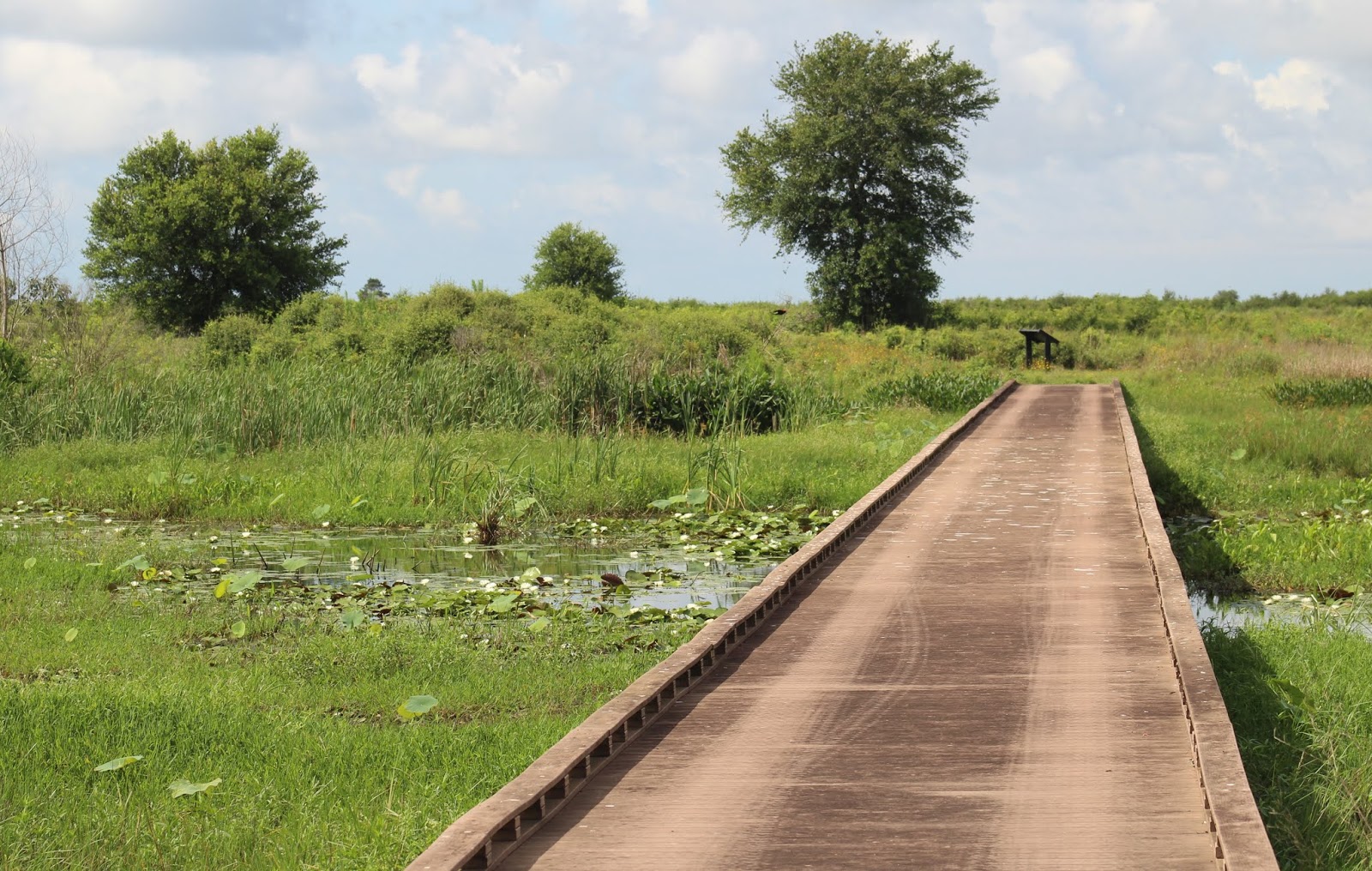
I drove down to Brazoria National Wildlife Refuge,
getting to the Refuge Headquarters a little before 10 a.m., and walked the
Otter Slough Trail.
It was hot and the
bugs were out, especially the mosquitoes and deer flies. But, that's birding in Texas, I guess. The trail crossed the slough,
where an Ibis fed in the shallows.
Much of the wetlands had dried up, but there was enough water for a small alligator to terrorize the frogs.
I saw movement amongst the cattails and reeds, and it
took a bit of time before the dark shape took the form of a Common Gallinule
chick.
Just as I figured out what the bird was, the adult gave
her definitive call, and showed herself.
 |
| The Mother and Child Reunion |
There are a lot of Dickcissels on the Refuge. This one shared its perch with a dragonfly.
I returned to the HQ and talked a bit with
one of the FWS staff and a ‘civilian’ who’d grown up on the place before it
became part of the Federal Refuge system in 1966. They lamented the loss of cottontails and
Bobwhite to the influx of Fire Ants.
 |
| Brazoria Refuge Headquarters |
I left the HQ and drove over to the Refuge’s Discovery
Center and started to walk over to their Big Slough trail, noticing that there
was a lesson from the Birds and the Bees under the Discovery Pavilion. The Birds included nesting Barn Swallows.
The Bees included this swarm of honey bees. I have no idea whether these might be
‘Africanized’ or not . . .
Big Slough trail has an Trail Guide, that
provides a lot of information on the wildlife and habitat, as well as their
management, on the Refuge.
 |
| It was slow birding along this trail, but the grackles were out |
The wading birds were feeding and roosting all along the
route. Yellow-crowned Night Heron fledglings were feeding in the marsh,
not far from some adult birds.
And the Dickcissels seemed ubiquitous.
Along the tour route, there are a couple places to get
out of the car and stretch one’s legs. At
Cox Lake there is a short trail that provides opportunities to view wildlife in
a fresh water slough, salt grass prairie and salt water lake. It starts at Big
Slough and meanders through the salt cedars to the Maddox Monument and Cox Lake
and back to the parking lot. This was
once the site of the Maddox Family homestead. There is an interpretive panel providing a
glimpse for what life was like to settle this harsh environment more than 100
years ago.
 |
| The shot of the Maddox homestead didn't come out, so here's a Common Nighthawk |
The Refuge also built an
observation deck that looks out across the coastal prairie and Rodgers Pond.
It being hot and humid, and being done with the birding,
I drove north to I-610, I-10 and Highway 90 east to Dayton, where Marty had
reserved a room at the Best Western. The
girls were shopping after their sessions were over, and showed up shortly after
I’d checked in and showered. We went out to supper at Jax Hamburgers in
Liberty. Marty had the shrimp basket
& I had the grilled chicken plate. Pretty good food.
Brazoria NWR Otter Slough Trail eBird Checklist is Here
Brazoria NWR Big Slough Auto Tour Route eBird Checklist
is Here