OK. I have to admit it. I grew up in the Pacific Northwest. I’ve spent almost the entirety of my life in
Oregon and Washington.
I’ve never before
been to Alaska . . . that changes today as I leave for a birding tour with WINGS to Saint Paul Island on the Pribilofs.
Friday September
6th:
The alarm went
off at 3:30 a.m. on Friday the 6th, and Marty threw me out of bed to get ready
for the Capital Aeroporter shuttle to pick me up at 4:25.
There was only one other pickup, a family of 4 at the Red Lion, and then
we drove pretty quickly up to SeaTac. I
made it through TSA Insecurity fairly easily, although I had to go back to the
Alaska Airlines desk because the TSA scanner could not read the printed
boarding pass & I had to have it re-issued.
I got a breakfast
sandwich at “Lucky Louie’s” and a cup of mocha espresso at “Dilettante’s” then
went to the C gates to catch my flight, only to find that they’d moved the
departure back to the North Satellite.
It’s a good thing that I had arrived early, as it took another 15
minutes for me to take the rail out there.
 |
| Bering Glacier and the Seal River mouth |
Alaska Airlines Flight
No. 113 boarded and departed on time at 9 a.m., and we had good views of the
Johnstone Strait as far north as Port Hardy, before it clouded over. It cleared again along the Alaska coastline
as we passed the south end of Glacier Bay National Park, and from there on
north into Anchorage.
 |
| Malaspina Glacier |
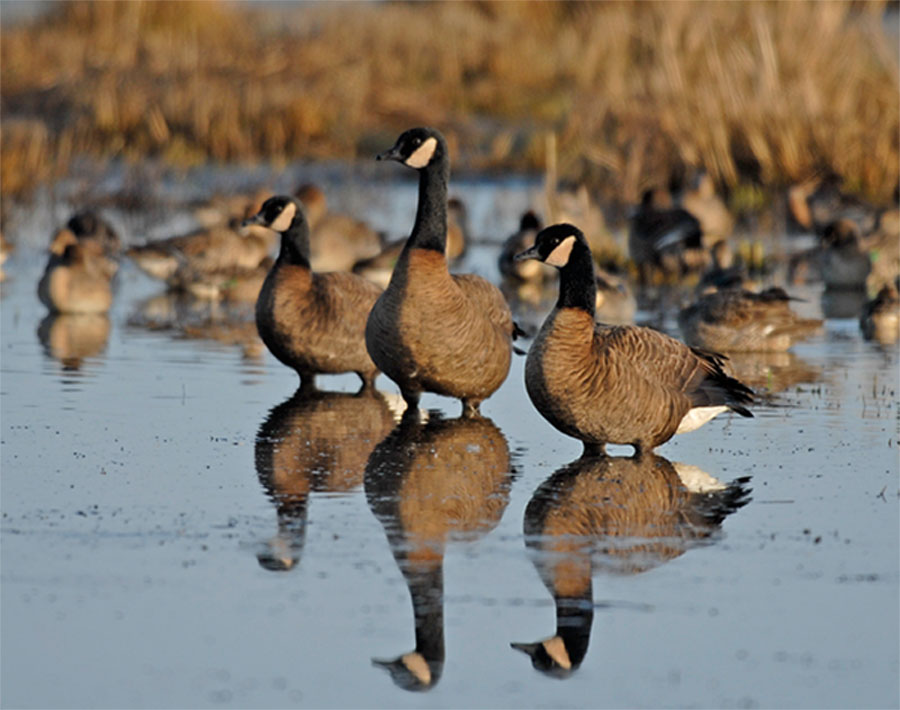
The plane passed the Copper River Delta. I'd never seen the place, although it holds a place in my heart as the nesting grounds of the Dusky Canada Goose. This subspecies winters primarily in the Willamette Valley and along the lower Columbia River, and was the cause of the US Fish and Wildlife Service establishing National Wildlife Refuges in the Valley.
 |
| Copper River Delta |
The 1964 Alaska Earthquake lifted the Delta several meters, resulting in vegetation changes and an increase in predation by bears and foxes. The population began to decline and conservation efforts were needed. I spent a lot of time in the 1970s and 80s working with these birds.
 |
| Dusky Canada Geese - Branta canadensis occidentalis (FWS photo) |
Our flight landed
without a bump, and I was surprised how much quieter the airport was than SeaTac.
Getting my checked bag, I caught a shuttle to
the Coast International Inn, unpacked, and went for a walk around the east
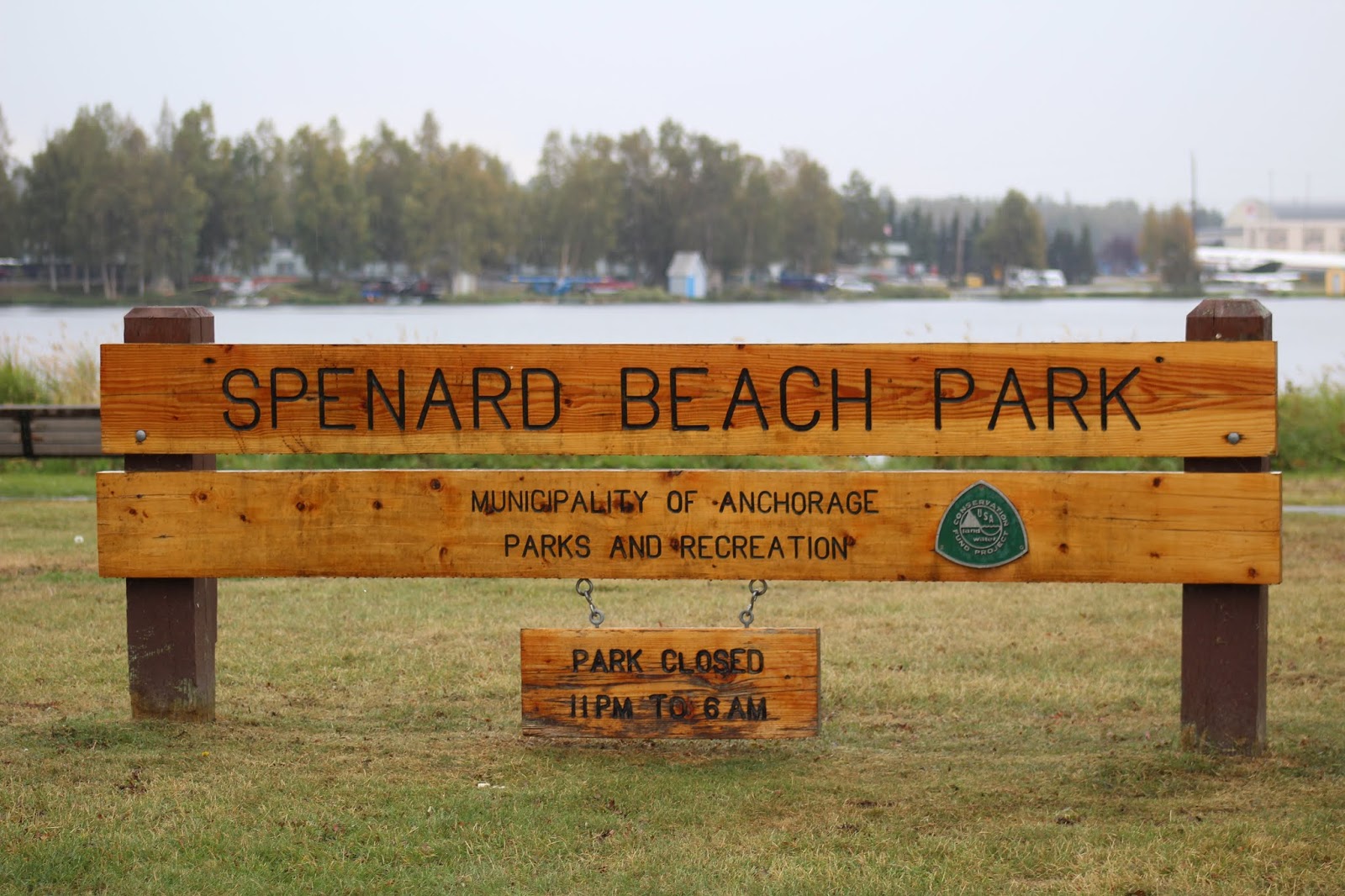
end of Hood - Spenard Lake.
It appears
that the lake is the world’s largest and busiest seaplane base.
The air was very
active with non-avian flyers.
And the planes were lined up wing to wing.
but this "Wings" has no connection to the WINGS Birding Tours.
There were quite
a few diving ducks on the lake, and it gave me a good refresher course in
separating the two scaup species while they are in eclipse and immature
plumages!
 |
| White in the Primaries - Diagnostic for Greater Scaup |
I finally
recalled that, besides Greater Scaup having white in the wings that goes into
the primaries (Lesser Scaup have dark primary feathers), the female Greaters often
can have white “ear patches”.
Back at the Coast International, I ate at the attached “Pipers” restaurant, and went to bed after
watching the Brewers beat the Cubs 7-1. While washing up, I realized that my Spanish was pretty rusty, but still puzzled over the motel's soap that was labeled "verde" but wasn't green . . . ?
Saturday
September 7th:
I woke after 8
hours of sleep at 5 a.m., worked a bit on my Blog (catching up as far as July
12…), and went down for breakfast. The
Hotel provides a voucher for “continental” breakfast of coffee and a sweet roll
or $5 off of their menu items. I had a
crab omelet. Because, well . . . Alaska!
 |
| Not good enough for a State Bird . . . . |
A little before
noon, I went for a walk to Earthquake Park, where a large section of the bluff
and neighborhood gave way during the Good Friday Quake of 1964. The light rain that was falling when I began
the walk turned into a steady downpour by the time I got to the park.
 |
| Turnagain Neighborhood after the 1964 Quake |
I decided to take
the interpretive trail through the slide area, which gave a good explanation of
the earthquake. The impact of that event
is all around you and the story boards in the park explained earthquakes in general,
and this one in particular, very well.
The Turnagain
neighborhood was built on sandy bluffs overlying "Bootlegger Cove
clay", and suffered considerable landslide damage. The neighborhood lost 75 houses in the
landslide, and the destroyed area was eventually turned into Earthquake Park.
The vegetation
has grown back since raw blocks of the hillside collapsed into jumbles of rock,
sand, and clay, and the birch, alder and spruce trees are now up to 55 years
old. Eerily, I did not see or hear any
birds in the woods, until I dropped down to the Tony Knowles bike path and came
out along the shore of Turnagain Arm.
 |
| Garden at the Turnagain Methodist Church. Bless those Green Beans! |
I returned to the
hotel, and took a short nap until I got a call from one of the tour
participants, Rick Prescott. He and
Lorie were down at the bar, and he’d just had a call & email from trip
leader Luke Seitz that he and a number of birders were stuck on Gambell due to weather, and our
planned 7 p.m. supper would have to be on our own. I am somewhat surprised that Matt Brooks at WINGS did not include me in the communications about the weather-related changes in
plans; he had my email. It seemed
somewhat unprofessional.
But, there being
little I could do about it, I went to bed to prepare for the adventure tomorrow.
Lake Spenard Sept 6th eBird
Checklist is Here
Lake Spenard Sept 7th eBird Checklist is Here
Turnagain Neighborhood eBird Checklists are Here and Here
Earthquake Park eBird Checklist is Here
 |
| Lake Spenard Wigeon |